 yuanming@yuanming.com.cn
  86-755-89703008
How Printing Factories Operate in 2026: A Buyer’s Guide
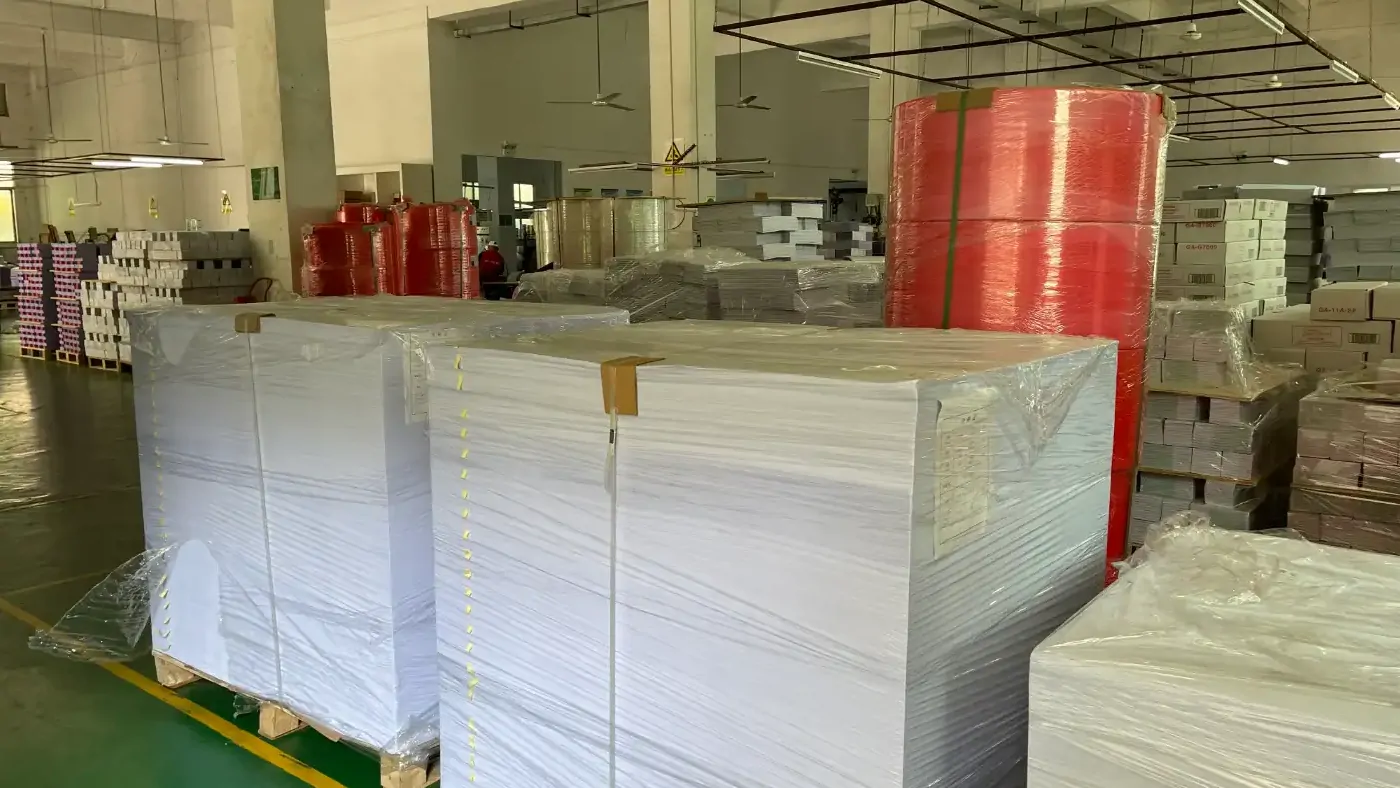
Modern printing factory operations are a chain of controls, not a single press run. A reliable factory converts a buyer’s specification into job data, checks artwork before production, plans materials and capacity, verifies printing and finishing, inspects the result, and prepares the finished goods for transport. For an overseas buyer, the useful question is not simply “What machines do you have?” but “How do you stop the requirement from being lost at each handoff?”
That question matters in 2026. Industry reports describe squeezed margins, faster job turns, uneven capacity use and customers who expect reliability as well as price. Automation can reduce repetitive handoffs, but it does not remove the need for clear approval rules and physical quality checks.
Why Printing Factory Operations Matter
The European printing industry remains large but fragmented. Intergraf’s 2025–2026 activity report describes about 100,000 printing companies across the EU27, UK, Switzerland, Norway and Iceland, with 95% employing fewer than 20 people. Its 2026 economic material also highlights pressure from order declines, labour costs, regulation and fluctuating capacity.
North American printers face a similar operational problem. PRINTING United Alliance’s 2026 State of the Industry research highlights shorter lead times, faster job turns and changing client purchasing habits. These signals do not mean every factory has the same problem. They show why buyers should evaluate the operating system around the equipment, not assume that a low price or long machine list guarantees control.
For small-business purchasers, this changes the supplier conversation. A factory should be able to explain what information it needs, who approves changes, where checks occur and what happens when the job does not match the approved requirement.
Map the Order Before Production
An order should begin as a controlled specification. The product name alone is not enough. “Custom notebook,” “invoice book” or “paper placemat” can describe many different constructions.
A useful specification records:
- finished size and orientation;
- quantity and number of artwork versions;
- paper or board requirements;
- page, sheet or NCR-part count;
- colors and print sides;
- binding, perforation, numbering and other finishing;
- packing units and destination;
- the approved artwork file and revision.
The factory should convert these details into a job ticket or equivalent production record. The buyer should ask for a written quotation and proof that reference the same revision. If a later change affects price, material, appearance or delivery, it should be approved before production rather than passed verbally between departments.
For example, a buyer requesting custom business forms should define copy parts, sets per book or pad, numbering and perforation. A custom notebook requires page count, binding, cover construction and inner-page artwork. This is where a factory prevents an ambiguous enquiry from becoming an ambiguous job.
Control Artwork and Job Data
Prepress is the bridge between the buyer’s file and production. It checks whether the artwork can produce the intended result and prepares the approved data for the selected process.
The exact preflight varies by job, but buyers can ask how the factory checks page size, bleed, image resolution, fonts, color setup, page sequence, variable data and finishing positions. A proof should identify the revision being approved. Approval should not be assumed from an unrelated email or an old file with a similar name.
Automation helps when it moves consistent job data between estimating, prepress, scheduling and production. CIP4, the international print-automation standards organization, promotes process automation and interoperability. Automated handoffs, however, are only as dependable as their input. A wrong size or outdated artwork can move efficiently and still produce the wrong result.
Buyer evidence to request:
- the final specification or job summary;
- the proof revision and approval record;
- confirmation of any variable numbering or version file;
- the agreed response when preflight finds a conflict.
Verify Printing and Finishing
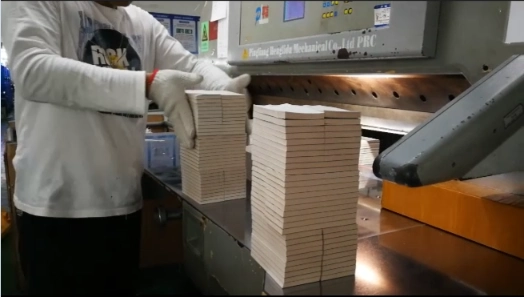
Production is not complete when ink reaches paper. Cutting, folding, collating, binding, perforating, numbering and packing can determine whether the product works in daily use.
Method selection should follow the approved product, run length, material, color requirement and finishing plan. Buyers do not need to prescribe a press without understanding the job, but they should ask the supplier to explain why the proposed route fits the specification.
A stronger control plan identifies the measurable result at each operation. A cut product needs the correct finished dimensions and orientation. A multi-part form needs the intended sheet sequence and copy behavior. A numbered item needs the approved sequence, position and duplicate handling. A bound product needs the correct page order and usable opening.
The factory photograph used here shows a real paper-products cutting stage. It establishes that cutting is a separate operation; it does not prove a tolerance or capacity. Those values must be confirmed for the specific quotation.
Inspect Quality at Checkpoints
Final inspection is important, but waiting until the entire order is finished makes correction more expensive. A practical quality plan places checks where a defect can first appear.
| Checkpoint | Typical question | Useful evidence |
|---|---|---|
| Incoming material | Does the material match the approved requirement? | Material label, job record or sample confirmation |
| First production output | Are size, color, copy sequence and position correct? | Approved first-off check |
| Finishing setup | Are cut, perforation, numbering or binding aligned? | Setup sample or inspection record |
| During the run | Is the result remaining consistent? | Interval checks appropriate to the job |
| Final packing | Are quantity, versions, labels and cartons correct? | Packing list and final count |
The exact sampling method depends on the product and risk. Buyers should avoid demanding a generic certificate that does not describe what was inspected. It is more useful to agree on critical requirements before production and ask how nonconforming pieces are isolated and resolved.
If physical appearance is important, request a relevant sample rather than relying only on a screen proof. Treat the sample as evidence of material and construction, not a guarantee that every future order will be identical without an agreed specification.
Plan Capacity Without Guesswork
Capacity is more than a machine’s maximum speed. Material availability, artwork approval, setup, finishing, inspection, packing and the factory’s existing schedule all affect completion.
This is especially important when industry conditions create uneven utilization. Intergraf’s current economic material notes strong fluctuations between busy and quiet periods in parts of the European market. A date discussed before artwork or material is confirmed should therefore be treated as an estimate, not an unconditional promise.
Before relying on a schedule, ask:
- What must be approved before the production clock starts?
- Is the quoted date an ex-factory date or an arrival date?
- Which material or finishing step is on the critical path?
- How will a proof revision change the schedule?
- When will packing dimensions and transport information be available?
These questions help a small business build a realistic purchasing timeline without asking a factory to disclose confidential production data.
Prepare Finished Goods for Export
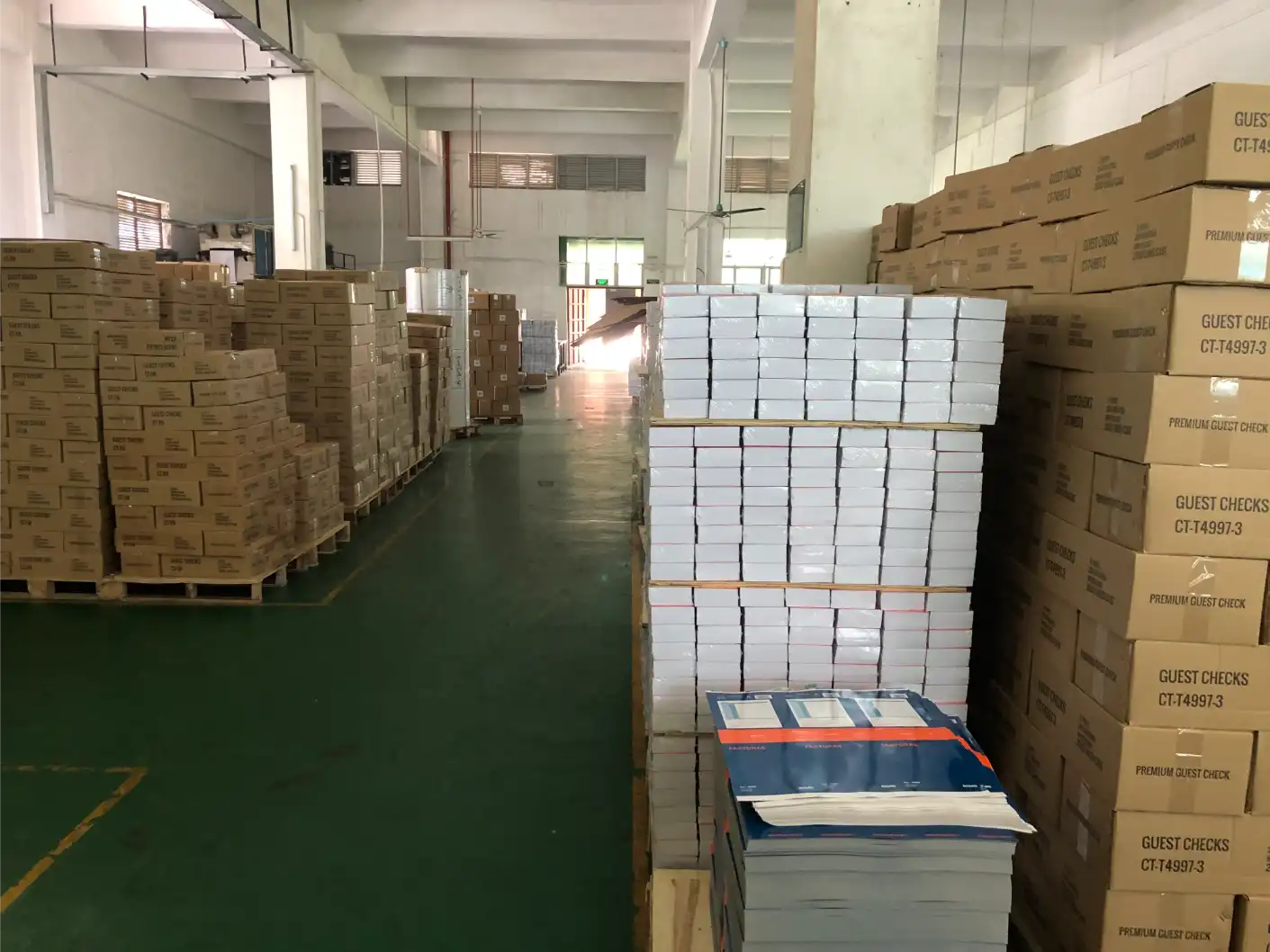
Export preparation begins before cartons are closed. The factory needs the destination, packing units, label requirements and transport assumptions early enough to plan them with the product.
Finished goods should be separated by version or item where necessary, counted in usable units and packed to limit movement and handling damage. The commercial description, carton marks and packing list should agree with the shipment. Pallet and carton choices also affect freight volume and handling.
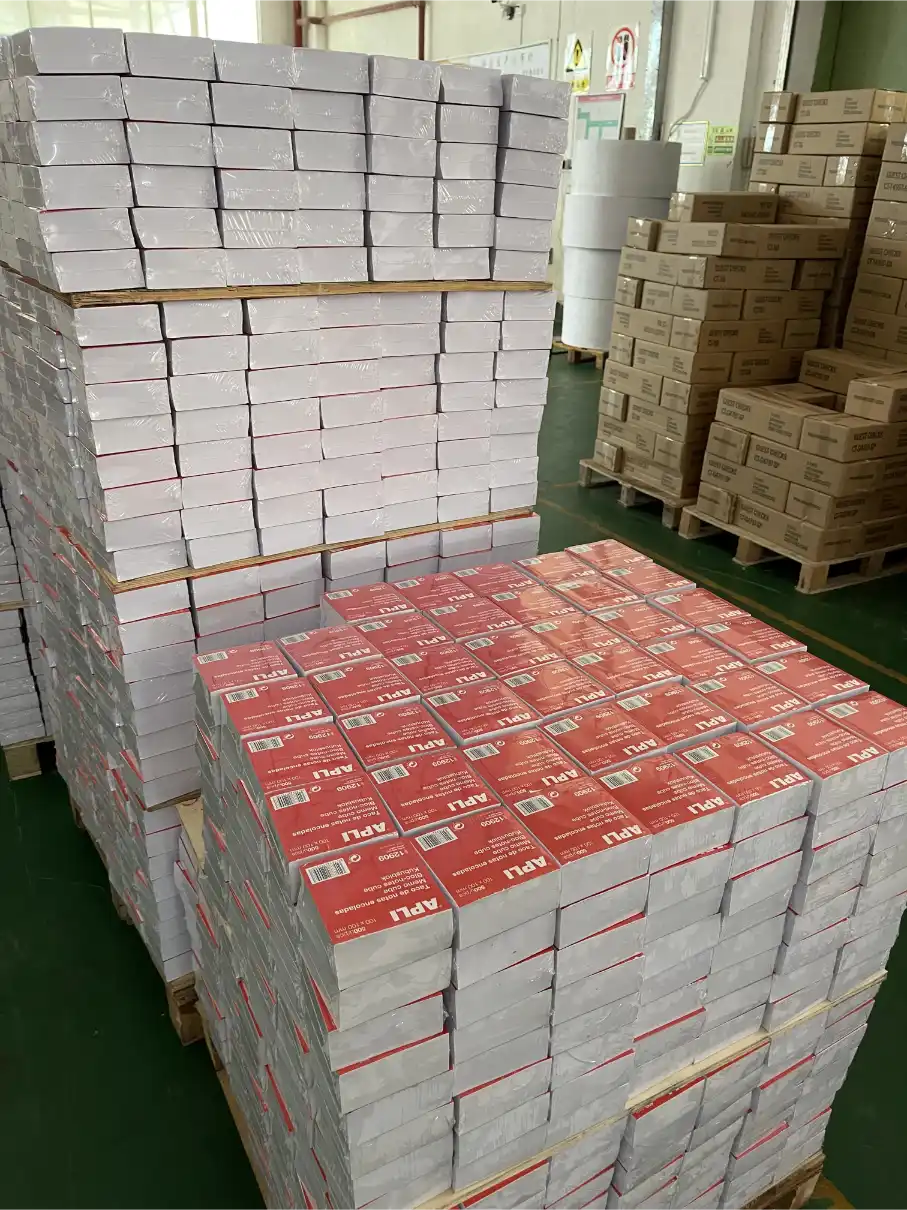
The warehouse photographs in this article show real PrintingMaxx/Yuanmei paper stock and finished printed goods. They illustrate material staging and packed-product handling, but they are not evidence of a specific customer’s order or a universal packing method. The correct packing plan must be confirmed for the product and transport route.
Buyers comparing overseas quotations should also build a separate landed-cost worksheet. Factory operations determine what is ready to ship; the worksheet identifies which freight, customs and delivery charges remain.
Audit the Operating Controls
A remote or onsite factory review should follow one hypothetical order rather than collect disconnected photographs. Ask the supplier to explain how the same specification moves through enquiry, proof, production, finishing, inspection and packing.
Use this buyer checklist:
- Specification: Is one controlled requirement used by sales and production?
- Revision: Can the factory identify the approved artwork and proof?
- Handoffs: What information moves from prepress to production and finishing?
- Checkpoints: Which requirements are checked before, during and after the run?
- Traceability: How are versions, numbering or batches identified when relevant?
- Exceptions: Who stops or escalates a job when a requirement is unclear?
- Packing: How are quantities, cartons and labels reconciled?
- Schedule: Which approvals and materials determine the committed date?
A useful answer describes a repeatable process and shows relevant evidence. A weak answer relies only on equipment photographs, generic assurances or an unsupported “no problem.”
Send a Controlled Enquiry
Modern factories are under pressure to turn jobs faster while controlling more versions, finishing steps and buyer expectations. The buyer can make that system more reliable by sending complete requirements, approving one identified proof and treating changes as controlled revisions.
To discuss a PrintingMaxx paper-product order, prepare the product type, finished size, quantity, material, artwork versions, printing, finishing, packing and destination. Then contact PrintingMaxx for a specification review and quotation. The review should confirm what is included and identify any item that still requires a decision.