 yuanming@yuanming.com.cn
  86-755-89703008
B2B Sourcing Channels in 2026: Marketplaces, Trade Shows or Social Media?

B2B sourcing channels have not split into “old” and “new” camps. Marketplaces and trade shows still help buyers find and compare suppliers, while social media now influences which factories enter the shortlist before a formal enquiry is sent. For a small business buying custom printing, the safest approach is hybrid: discover widely, then verify through samples, written specifications and direct contact.
Key takeaways
- Marketplaces are efficient shortlist builders, not complete supplier audits.
- Trade shows remain useful when physical samples and rapid technical conversations matter.
- Social media has disrupted discovery and trust-building, but polished content is not production evidence.
- Move every promising supplier into the same documented verification and RFQ process.
How B2B Sourcing Changed
Traditional foreign-trade channels were built around scheduled contact. A buyer searched a B2B directory, visited a trade fair, received a referral or contacted an export sales team. The supplier controlled much of the first impression through a booth, catalogue or listing.
Social platforms changed the order of events. A procurement manager may now encounter a press setup, binding demonstration, packaging sample or employee explanation before searching the company name. Gartner reported in 2025 that social media was used by a large majority of B2B buyers during purchase consideration. Treat that as evidence of channel importance—not proof that a social profile closes the purchase by itself.
The disruption is concentrated at the top of the buying journey: attention, education and the first layer of trust. The difficult work below it—confirming a legal entity, production fit, artwork handling, quality controls, lead time and landed terms—still needs direct evidence.
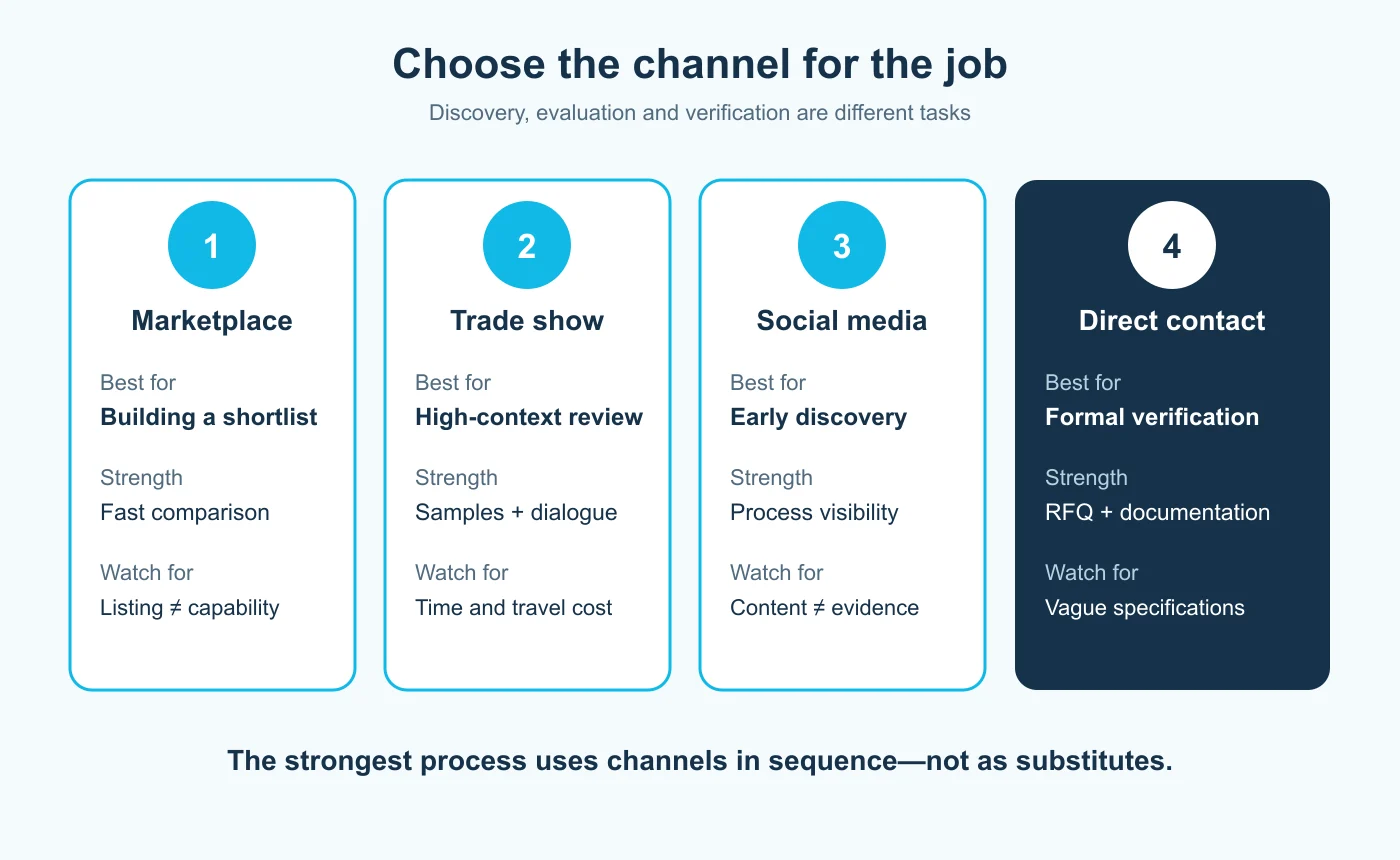
Marketplaces: Fast Shortlisting
International B2B marketplaces reduce the cost of discovery. Buyers can search by product, location, minimum order quantity and stated capabilities, then contact several suppliers without building a list from scratch. Platform messaging, transaction tools and account histories may also create a more structured first contact.
The weakness is compression. Different factories can look remarkably similar inside the same listing template, while product photographs may not reveal who made the item, when it was made or whether the current equipment can reproduce it. A badge or response rate is a platform signal; it is not a substitute for a sample made to your specification.
Use marketplaces to create a shortlist, compare how suppliers answer the same questions and preserve an early record of the conversation. Do not choose only from the lowest unit price. Move credible candidates into a formal RFQ that defines size, paper, colors, finishing, quantity, packing, delivery destination and trade terms.
Trade Shows: High-Context Review
Trade fairs concentrate people, samples and conversations in one place. A buyer can compare paper feel, binding, print registration and finishing across suppliers, then ask follow-up questions without waiting for several email cycles. That makes exhibitions valuable for unfamiliar categories, strategic orders and relationships where tactile quality matters.
They are also periodic and expensive. Travel, staff time and crowded schedules limit how deeply every supplier can be reviewed. Industry surveys such as UFI’s exhibition barometer show continued business activity in the exhibition sector, but they should not be read as proof that every show or exhibitor is relevant to a particular print buyer.
Before attending, prepare a one-page requirement sheet and book meetings with a narrow list. At the booth, record the exact sample reviewed, ask whether it was produced in-house, and agree on the next verification step. A productive meeting should end with an owner, a document and a deadline—not just exchanged business cards.
Social Media: Earlier Discovery
LinkedIn, YouTube, Instagram and short-form video platforms let suppliers demonstrate processes that are difficult to explain in a static catalogue. A buyer may see how paper is collated, how a proof is checked or how finished books are packed. This helps smaller factories build familiarity without waiting for a trade show.
For buyers, the benefit is context. Repeated posts can reveal the products a supplier works with, the questions its team understands and whether it explains limitations openly. Social media can also speed up informal communication across time zones.
The risk is mistaking media skill for manufacturing skill. Edited video can hide subcontracting, old footage, unusual best-case samples or an incomplete workflow. Engagement numbers do not establish legal identity, capacity, color consistency or delivery performance. Use social content to generate questions, then verify the answers elsewhere.
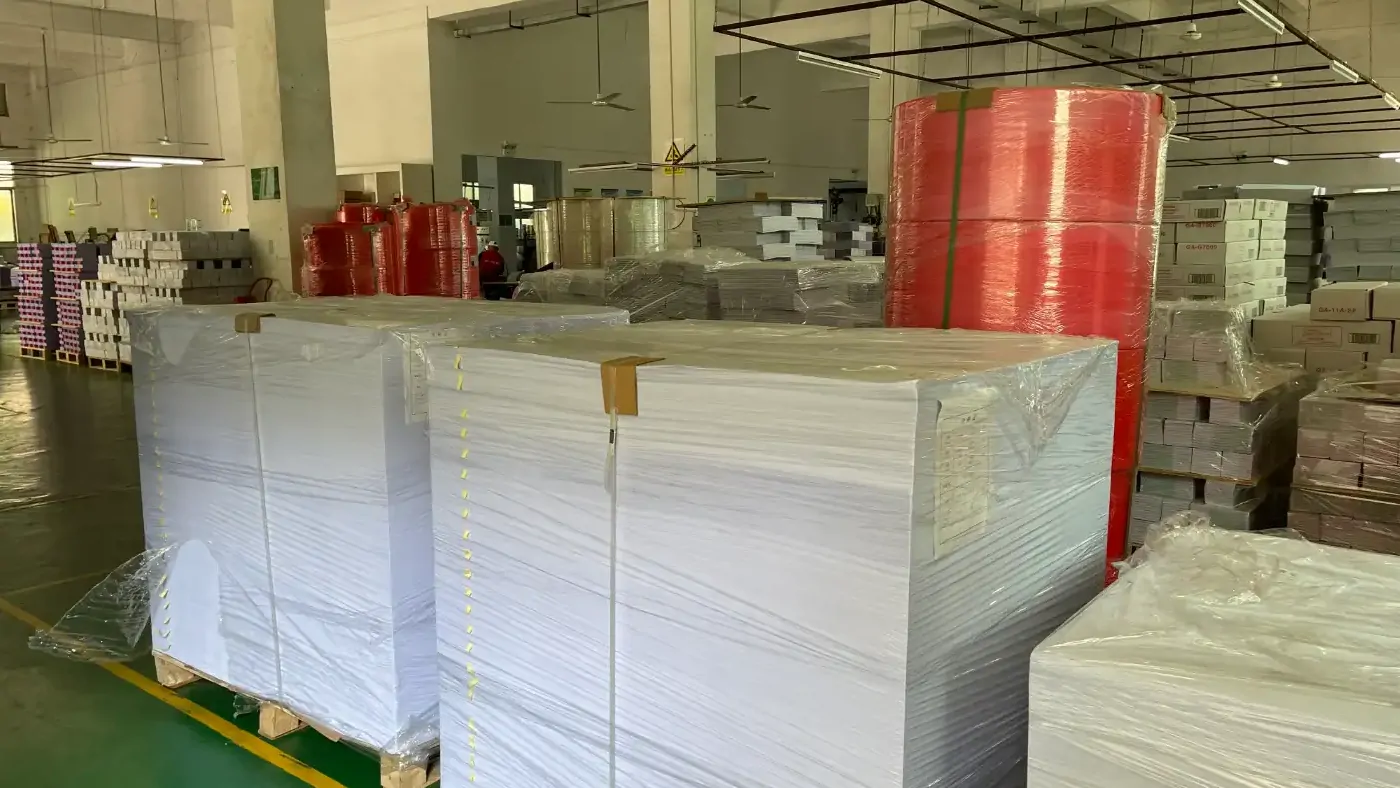
What Social Media Disrupts
New media does not simply replace traditional foreign trade. It changes who controls discovery and how quickly reputations form.
- Discovery becomes continuous. Suppliers can enter a buyer’s awareness between trade shows and outside marketplace search results.
- Expertise becomes visible. Buyers can judge whether a supplier explains paper, finishing and production trade-offs clearly before making contact.
- Response expectations accelerate. Informal messages feel immediate, although technical quotations still require controlled documents.
- Trust becomes easier to start and harder to prove. Frequent content creates familiarity, but the buyer must separate familiarity from verified capability.
Traditional exporters therefore face pressure to show real work, answer publicly and maintain a consistent digital presence. Buyers benefit from more choice, but they also carry more responsibility for filtering claims. The practical response is not to reject social sourcing; it is to make verification channel-independent.
Build a Hybrid Sourcing Process
The most reliable B2B sourcing channels work in sequence. Use whichever channel reveals a credible supplier, then move every candidate through the same gates.
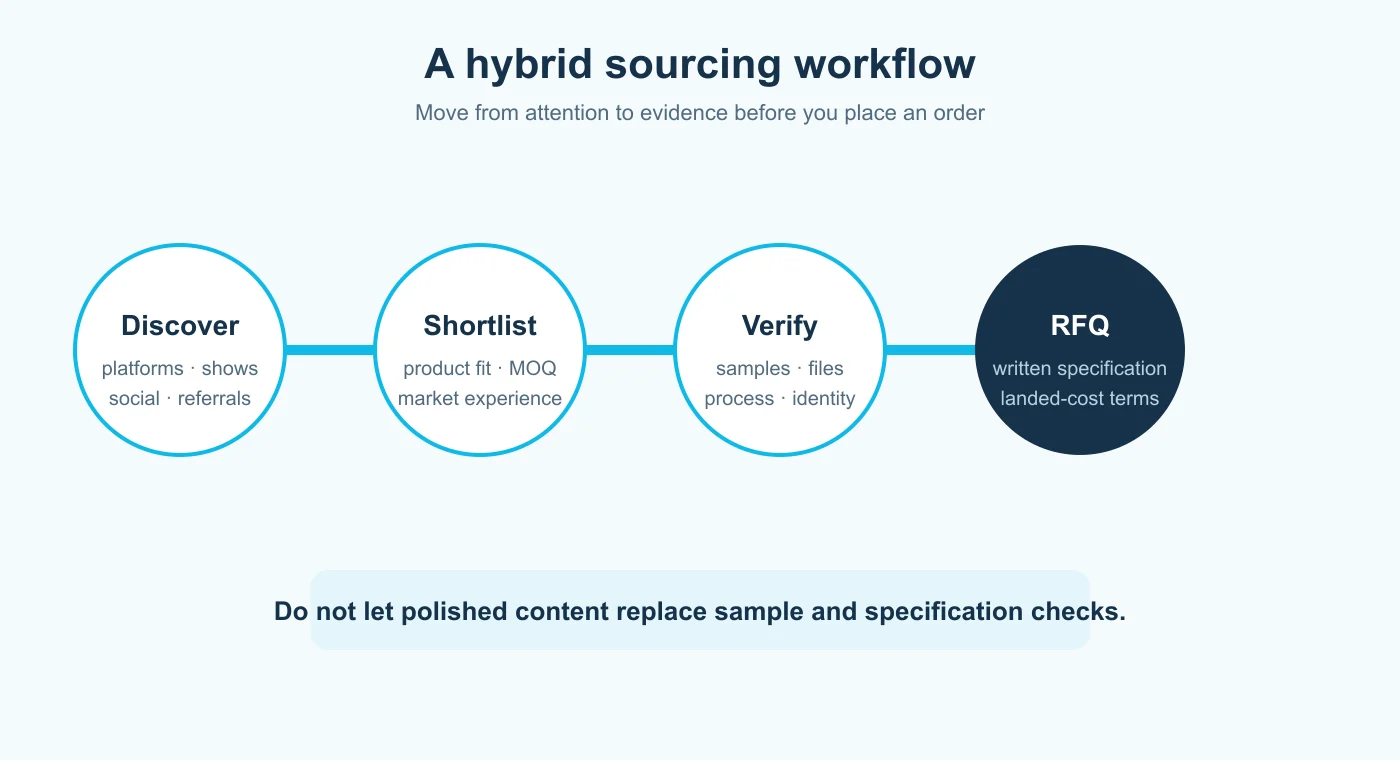
- Discover broadly. Use marketplaces, exhibitions, search, social media, referrals and supplier websites.
- Shortlist for fit. Check product experience, MOQ range, target market familiarity and communication quality.
- Verify identity and process. Match the business name, domain, address and payment beneficiary. Request current process evidence and relevant samples.
- Test a specification. Send the same written RFQ to each candidate so prices and lead times describe comparable work.
- Approve before scaling. Review artwork, a physical or production sample, packing method and shipment terms before a larger repeat order.
Verify a Printing Supplier
Verification should match the risk of the order. A standard notepad reorder needs less investigation than a multipart form with sequential numbering, custom perforation and a fixed delivery date. Even so, every overseas print order should answer the following questions:
- Does the legal entity receiving payment match the supplier you evaluated?
- Can the supplier show recent, relevant samples—not only a general catalogue?
- Who checks artwork, paper, color, numbering, finishing and packing?
- Which operations are completed in-house, and which are subcontracted?
- What does the quotation include, exclude and assume?
- What approval is required before production begins?
A good supplier should be able to discuss trade-offs, not just say yes. PrintingMaxx’s company information explains its printing focus, while the business forms range gives buyers a starting point for product-specific questions.
Send a Quote-Ready Enquiry
Channel choice matters less once the conversation reaches quotation. Whether the supplier was found at a fair, on a marketplace or through a video, send a controlled specification containing:
- finished size and page or part count;
- paper type, weight, color and any sustainability requirement;
- printing colors, coverage and variable data;
- binding, perforation, numbering and other finishing;
- quantity, packing units and carton requirements;
- delivery city/postcode, preferred Incoterm and required arrival window;
- proof or sample expectations and approval responsibility.
This turns a promising conversation into a comparable commercial decision. If you are evaluating custom printed paper products, send PrintingMaxx your specification and ask which details must be confirmed before quotation.
Sources and Limits
This article uses current channel evidence as directional context. Gartner’s 2025 B2B buying research supports the role of social media in purchase consideration; UFI’s 2025 exhibition barometer supports continued exhibition-sector activity but is an industry survey, not a buyer-demand census. The U.S. Commercial Service’s export guidance treats websites, localization and social media as connected parts of an international digital strategy. Platform reports describe platform activity and should not be treated as independent proof of supplier quality.