 yuanming@yuanming.com.cn
  86-755-89703008
Custom Notebooks vs Notepads: Which Fits Your Business?
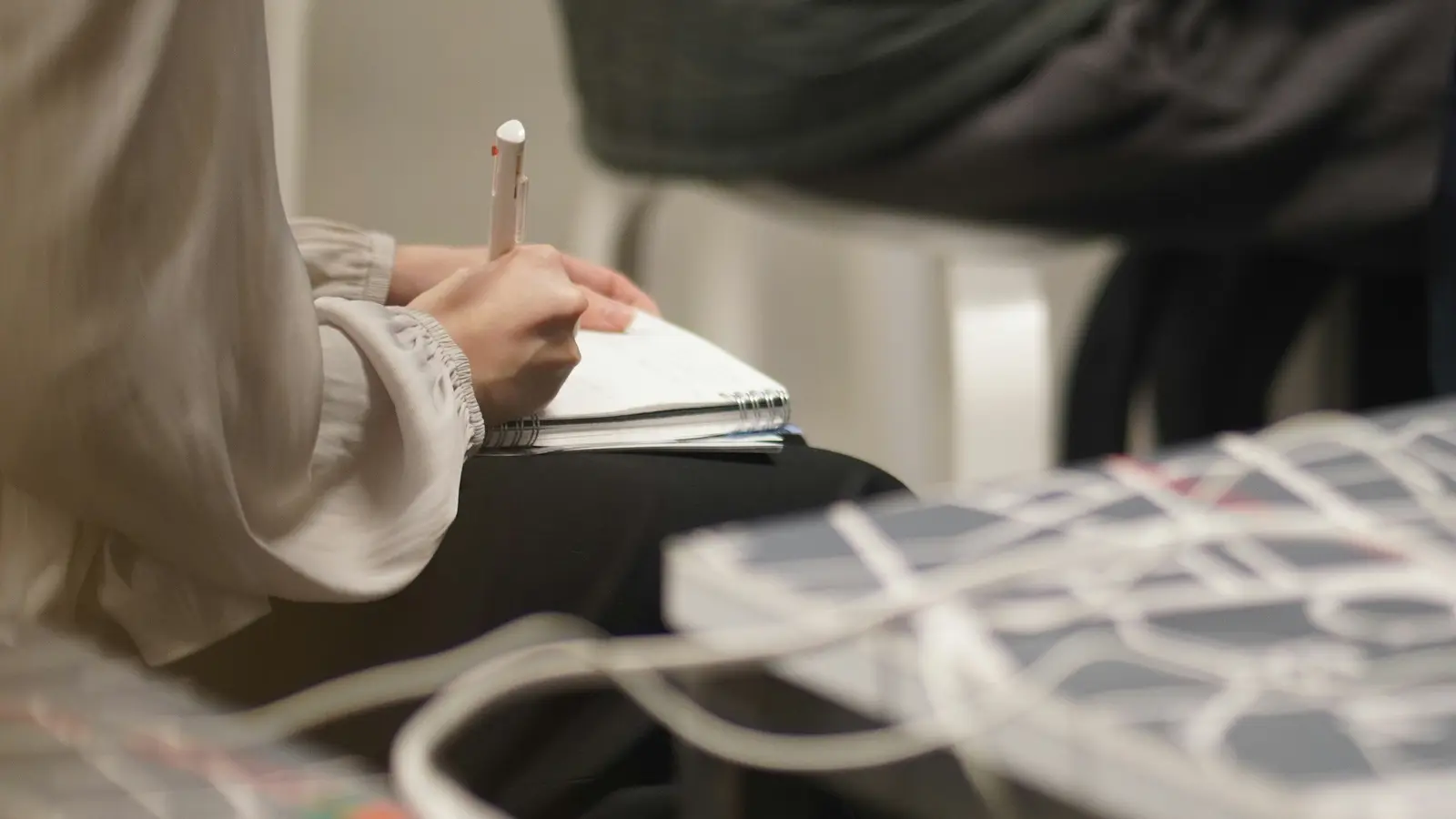
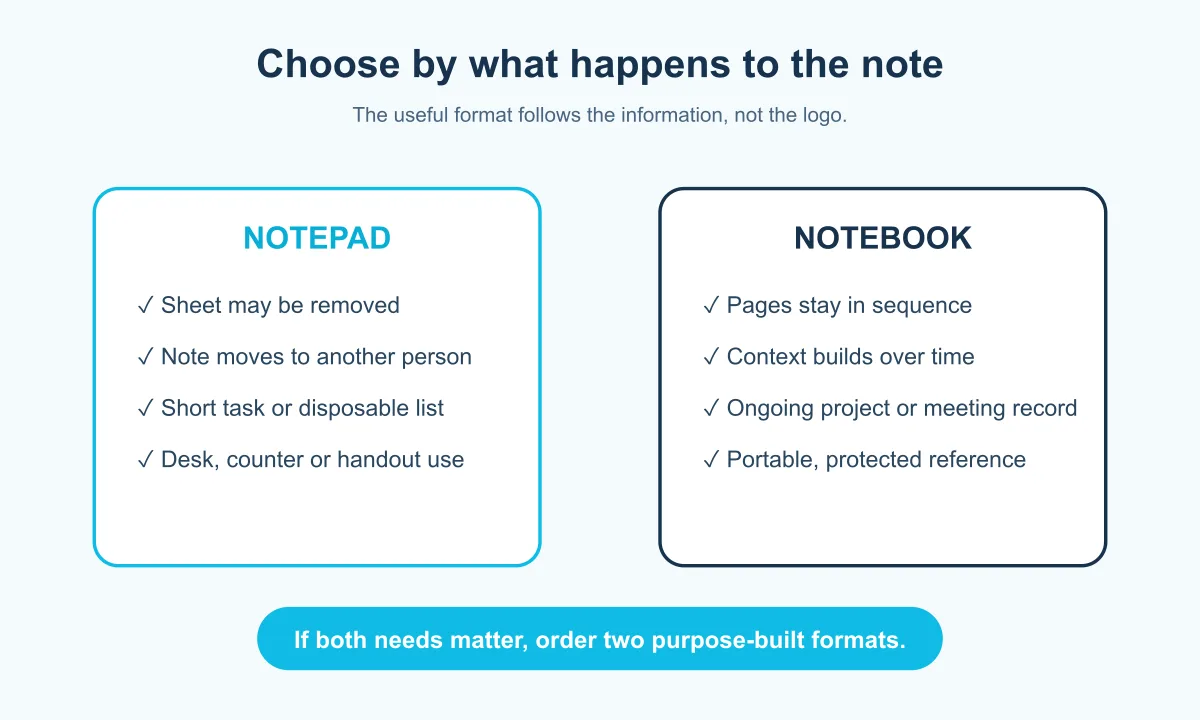
Choose a notepad when individual sheets are temporary, disposable or need to move to another person. Choose a notebook when notes need to stay together as a continuing record. That is the most useful way to compare custom notebooks vs notepads for a small business.
The logo matters, but the information lifecycle matters first. A beautifully branded notebook is frustrating if employees keep tearing out pages. A convenient tear-off pad is a poor archive when related notes need to be reviewed in sequence. Start with what happens after someone writes the note, then specify the size, paper, page layout and construction.
Quick decision
- Use a notepad for messages, estimates, checklists, counter notes and sheets that change hands.
- Use a notebook for meeting history, project records, field observations, training notes and other information that must stay together.
- If one team has both needs, two focused formats are usually clearer than one compromise.
Start with the Note Lifespan
Ask one question before discussing covers or colours: How long must this information remain useful?
A short-lived note may only need to survive until a call is returned, an item is picked, or a task is entered into another system. Removal is helpful because the sheet can travel with the task. This is natural notepad territory.
A lasting note gains value from what comes before and after it. Meeting decisions make more sense beside earlier discussions. Field observations can reveal a pattern when they remain in date order. A notebook protects that sequence and gives the user one place to return to.
The distinction is not about quality. Both products can be professional and purpose-built. It is about whether a page should separate from the product or remain part of it.
When a Notepad Works Best
A notepad is usually the better fit when the sheet is a working object. Someone writes on it, acts on it, passes it on or discards it when the task is complete.
- Phone messages handed to another employee
- Packing or stock-picking lists
- Appointment reminders
- Service estimates that move from a counter to a workshop
- Short meeting action lists
- Branded desk pads used for everyday calculations and notes
- Promotional pads designed to remain visible on a customer’s desk
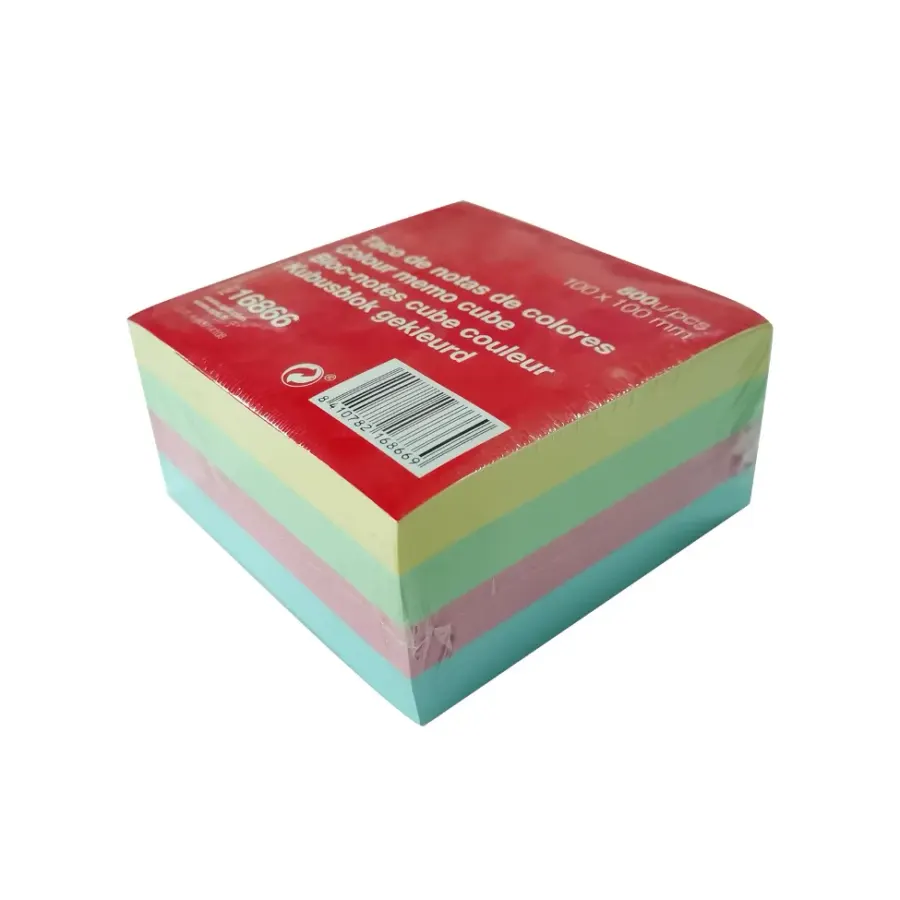
Think beyond “cheap notes.” A well-planned pad can contain prompts, checkboxes or fields that make a repeated task faster. A rigid backing board can make writing easier away from a desk. The glue edge and sheet count affect how the pad is handled, but those details should follow the intended task.
The main limitation is continuity. Once sheets are removed, the original sequence can disappear. If the business needs a dependable chronological record, a notebook is usually safer.
When a Notebook Works Best
A notebook is the stronger choice when pages should stay together and the user expects to return to earlier information.
- Recurring client or project meetings
- Site inspections and field observations
- Maintenance or quality notes
- Onboarding and training
- Sales-call records
- Design sketches and product-development notes
- Conference or workshop notes that will be reviewed later
- Premium staff or client gifts intended for repeated use
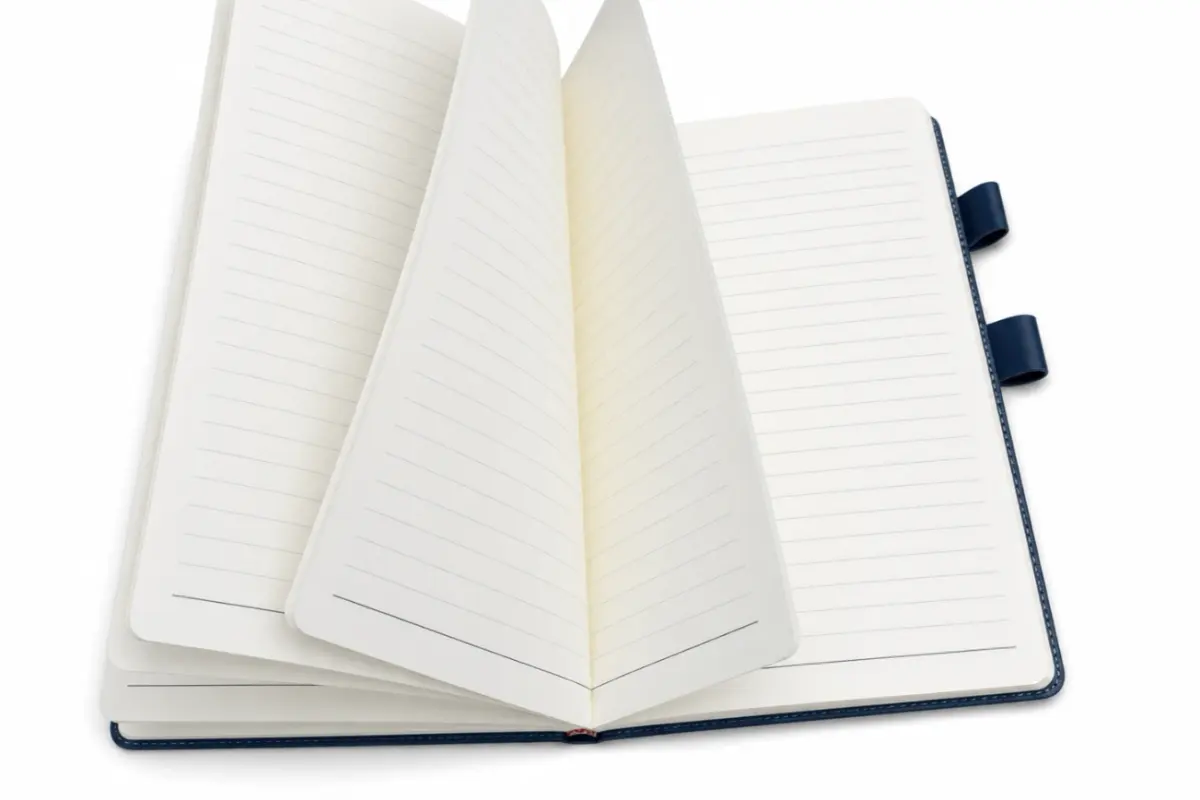
The cover protects the pages and gives the product a longer visual life. Binding also shapes use: some constructions open flatter than others, while a more protective cover may be preferable for travel or field work. Do not assume every binding, cover material or finishing option is available; include the desired behaviour in the quote request and confirm the construction with the printer.
For business buyers, the practical advantage is context. A notebook keeps the story of a project in one place instead of scattering it across loose sheets.
Custom Notebooks vs Notepads
The table below compares the decision points that normally matter most.
| Decision point | Choose a notepad when… | Choose a notebook when… |
|---|---|---|
| Page movement | Sheets should be removed or passed on | Pages should remain attached |
| Information life | Notes are temporary or task-specific | Notes build value over weeks or months |
| Sequence | Order is unimportant | Chronology and context matter |
| Typical location | Desk, counter, reception or work station | Meetings, travel, field work or ongoing projects |
| Page design | Repeated fields, checklists or a simple writing area are useful | Users need ruled, blank, dotted, gridded or custom interior pages |
| Brand role | Frequent everyday visibility is the priority | A longer-lasting branded item is the priority |
| Quote emphasis | Size, sheet count, glue edge and backing | Size, page count, binding, cover and interior layout |
PrintingMaxx has a verified page for custom notebook and notepad printing options. Use it to identify the product family, then ask for confirmation of the exact materials and construction required for your project.
Match Format to the Task
Instead of asking employees which product they prefer, observe one real work cycle.
- Reception desk: A caller leaves a message for a colleague. The sheet should detach and travel, so a notepad is the natural fit.
- Weekly operations meeting: Decisions refer to earlier actions and unresolved issues. Keeping entries in sequence matters, so a notebook is more useful.
- Field service: A technician may need a durable notebook for observations and a separate tear-off pad for information handed to a customer. One product does not have to serve both jobs.
- Event giveaway: Decide what should happen after the event. A compact notebook supports continued use; a notepad may offer practical desk visibility.
- Project planning: If pages must be rearranged or shared, a pad may be easier. If the team needs a dated project history, use a notebook.
These scenarios expose the real requirement quickly: movement versus retention.
Specify Paper and Page Design
After selecting the format, define how the user will write and what the page should help them do.
Start with the finished size. ISO 216 standardizes A- and B-series trimmed writing-paper sizes used widely outside North America, but the best format still depends on the writing area, portability and packing needs. If a product must fit a bag, uniform pocket, welcome kit or mailing pack, give the printer the actual dimensional limit rather than relying on a size name alone.
- Ruled pages support general notes and meetings.
- Blank pages suit sketches, diagrams and flexible layouts.
- Grid or dotted pages help technical, planning and design work.
- Custom fields can guide recurring entries such as date, client, project, action owner or follow-up.
- Light branding in a header or footer can preserve writing space better than a large central logo.
Ask users what pens they normally use and whether writing on both sides matters. Paper weight, opacity, surface and colour can change the writing experience, but do not select them from a generic chart alone. Request a relevant sample or proof and confirm the available stock with the supplier.
For reference, ISO 216 defines the A- and B-series trimmed sizes used for writing paper and certain printed matter.
Prepare a Quote-Ready Brief
A useful quote request describes the work the product must do. Prepare:
- Product type: notebook, notepad or both
- Intended user and use case
- Finished dimensions
- Quantity
- Page or sheet count
- Preferred interior style: ruled, blank, grid, dotted or custom
- Printing colours for cover and interior
- Notebook binding and cover behaviour, or notepad glue edge and backing requirement
- Artwork status and any brand-colour references
- Packing and destination requirements
- Target date, stated as a request for confirmation rather than an assumed turnaround
If an important option is still unknown, describe the behaviour you need. “Must open flat for left- and right-hand writing” is more useful than guessing a binding name. “Sheets must tear away cleanly for handoff” is more useful than ordering a pad without explaining the workflow.
When the brief is ready, request a custom printing quote and ask the PrintingMaxx team to confirm the available paper, binding, sheet-count and finishing options. The final choice should be a product people can use naturally: a notepad when information moves, and a notebook when information stays.